Your Best Sales Opportunity Is Already in Your Customer Database
When a technician finishes installing a new furnace, water heater, electrical panel, garage door, or water softener, most contractors breathe a sigh of relief.
The job is complete.
The invoice is paid.
Everyone moves on to the next project.
But what if that installation wasn't the end of the relationship?
What if it was the beginning of your next opportunity?
Every piece of equipment you install contains valuable information that can help you generate repeat business for years to come—if you take the time to capture it.
Every Installed System Tells a Story
Think about everything you know the day an installation is complete.
You know:
The equipment manufacturer
The model number
The serial number
The installation date
The warranty period
The expected service life
The accessories installed
The maintenance requirements
The customer's preferences
Unfortunately, many contractors never record more than the invoice.
That means years later, they're starting from scratch.
Your CRM Should Be an Equipment Database
Most contractors think of a CRM as a place to store customer names and phone numbers.
That's only part of its job.
A modern CRM should also track every major asset you've installed.
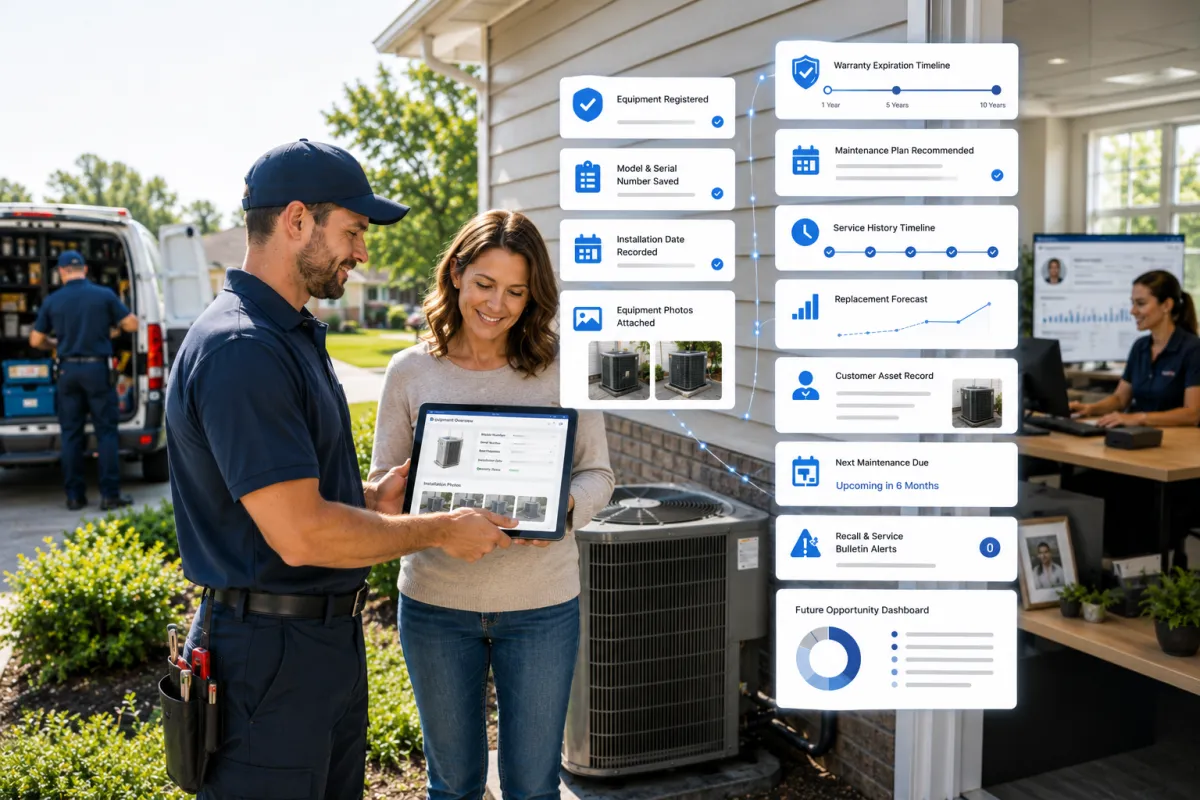
Imagine opening a customer's profile and instantly seeing:
Every piece of equipment you've installed
Service history
Maintenance visits
Warranty information
Photos from installation day
Equipment manuals
Parts replaced
Recommended upgrades
Instead of asking the homeowner what system they have, your team already knows.
Better Records Create Better Conversations
Customers appreciate working with companies that remember them.
Imagine receiving this call:
"Mrs. Thompson, we noticed your tankless water heater is approaching its annual maintenance. We'd like to help keep it operating at peak efficiency."
Or this one:
"Your HVAC manufacturer's parts warranty expires in six months. Let's inspect the system while it's still covered."
These aren't sales calls.
They're helpful reminders based on information you already have.
That builds trust.
Maintenance Starts with Knowing What's Installed
You can't properly maintain equipment if you don't know what equipment exists.
Recording installation details allows you to automatically schedule:
Seasonal tune-ups
Filter replacement reminders
Water heater flushing
Electrical inspections
Garage door maintenance
Water filtration service
Safety inspections
Instead of waiting for something to fail, you're helping customers protect their investment.
Replacement Opportunities Shouldn't Be a Surprise
Every piece of equipment has an expected lifespan.
Air conditioners eventually wear out.
Water heaters age.
Garage door openers become unreliable.
Electrical panels may no longer meet a family's growing needs.
When your CRM tracks installation dates, it can help identify equipment approaching the end of its useful life.
That allows you to begin conversations before an emergency forces the customer's hand.
Homeowners appreciate having time to plan instead of making expensive decisions under pressure.
Warranties Create Meaningful Follow-Up
Warranty information is often forgotten once the installation paperwork is filed away.
But warranty milestones create natural opportunities to reconnect.
For example:
A reminder that labor coverage is about to expire
A recommendation for an inspection before warranty expiration
Registration confirmation for newly installed equipment
Information about extended warranty options
These conversations demonstrate that you're looking out for the customer's best interests.
Every Technician Benefits from Better Information
Detailed equipment records don't just help sales.
They make every future service visit more efficient.
When technicians know exactly what equipment they're walking into, they can:
Bring the right parts.
Review previous repairs.
Understand the installation history.
Identify recurring issues.
Spend less time diagnosing the system.
That means shorter appointments, fewer return trips, and a better experience for the homeowner.
One Installation Can Lead to Years of Business
The initial installation is often just the beginning of the customer relationship.
Over the years, that same homeowner may need:
Preventive maintenance
Repairs
Replacement parts
Indoor air quality improvements
Smart home upgrades
Additional equipment
Warranty service
Complete system replacement
Without detailed equipment records, many of these opportunities are missed.
With accurate records, they become part of a proactive customer care strategy.
Turn Information Into Relationships
Collecting equipment information isn't about building a bigger database.
It's about serving customers better.
When you remember what you've installed, when it was installed, and what the customer is likely to need next, every conversation becomes more relevant.
Customers notice the difference.
They feel known.
They feel valued.
And they're far more likely to return to the company that already understands their home.
Build a Business That Remembers Every Installation
Every installation creates valuable information.
Don't let it disappear once the invoice is paid.
Capture it.
Organize it.
Use it to serve customers better.
Over time, your equipment database becomes one of your company's most valuable assets—not because of the data itself, but because it helps you build stronger relationships, create timely service opportunities, and earn repeat business for years to come.
Ready to Turn Every Installation Into a Long-Term Customer Relationship?
REACHMORECRM gives service contractors a complete equipment management system that stores installed assets, model and serial numbers, warranty information, installation photos, service history, maintenance schedules, and replacement timelines—all within each customer record. By transforming installation data into actionable insights, you can deliver more proactive service, uncover future opportunities, and turn every completed job into the beginning of a lasting customer relationship.